Table of Contents
ToggleWhether you’re building a deck, trimming branches, or assembling raised garden beds, having the right outdoor tools makes the difference between a frustrating afternoon and a job well done. Milwaukee outdoor tools have become a staple for homeowners and serious DIYers who demand durability, precision, and reliability. The brand’s focus on cordless technology, rugged construction, and battery compatibility means you’re investing in a system that grows with your projects. This guide walks you through the essentials, from drills to saws, helps you pick the right battery setup, and shows you how to keep your gear running strong season after season.
Key Takeaways
- Milwaukee outdoor tools stand out for durability, consistent performance, and a battery ecosystem where M18 and M12 systems work across dozens of tools—eliminating the need for multiple chargers and proprietary batteries.
- Essential Milwaukee outdoor tools include cordless drills and impact drivers for fastening, circular saws and miter saws for cutting, and chainsaws for trimming, each designed to handle real-world outdoor conditions.
- Start your Milwaukee tool setup with two 4.0 or 5.0 Ah batteries to complete modest projects without running dry, and opt for the M18 system for best runtime and power on residential outdoor projects.
- Extend Milwaukee tool lifespan by wiping down metal parts after use, storing batteries at room temperature (60–80°F) at 40–60% charge for long periods, and checking chuck and battery contacts monthly.
- While Milwaukee outdoor tools cost more upfront than budget brands, their resale value and decade-plus lifespan make them a smart long-term investment for homeowners and serious DIYers.
Why Milwaukee Tools Stand Out for Outdoor Work
Milwaukee’s reputation in the outdoor power tool space comes down to three things: durability, consistent performance, and a battery ecosystem that actually makes sense. Unlike some brands that nickel-and-dime you with proprietary batteries, Milwaukee’s M18 and M12 systems let you swap batteries across dozens of tools. That means one charger and one set of batteries can power your drill, impact driver, miter saw, and leaf blower.
The brand engineers for real-world abuse. Tools are tested on job sites, not just in labs. Outdoor conditions, mud, temperature swings, rain, dust, get factored into design. Brushless motors reduce maintenance and last longer than brushed versions, and metal chuck housings on drills won’t crack if dropped. Recent reviews of the best Milwaukee tools highlight how consistently their outdoor equipment outperforms competitors in stress tests and long-term durability.
Price-wise, Milwaukee tools cost more upfront than budget brands, but the resale value and tool lifespan make the math work over a decade. You’re not replacing a bargain drill every two years.
Essential Milwaukee Outdoor Tools for Every Homeowner
Cordless Drills and Impact Drivers
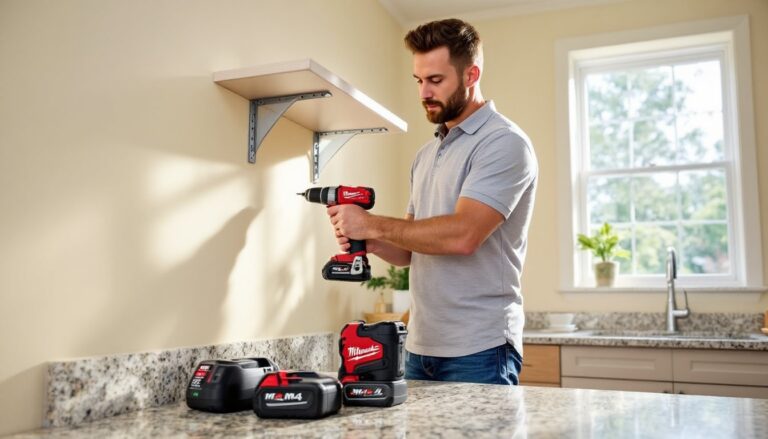
A M18 Compact Drill/Driver (half-inch chuck, two-speed transmission) is the workhorse for outdoor fastening. Use it for installing hardware on decks, securing fence posts, hanging shelves, or assembling furniture. The half-inch chuck grips bits firmly without slipping, and the two-speed gearbox (0–450 and 0–1,500 RPM) gives you the low-torque control needed for delicate fasteners and the speed for bulk hole-drilling.
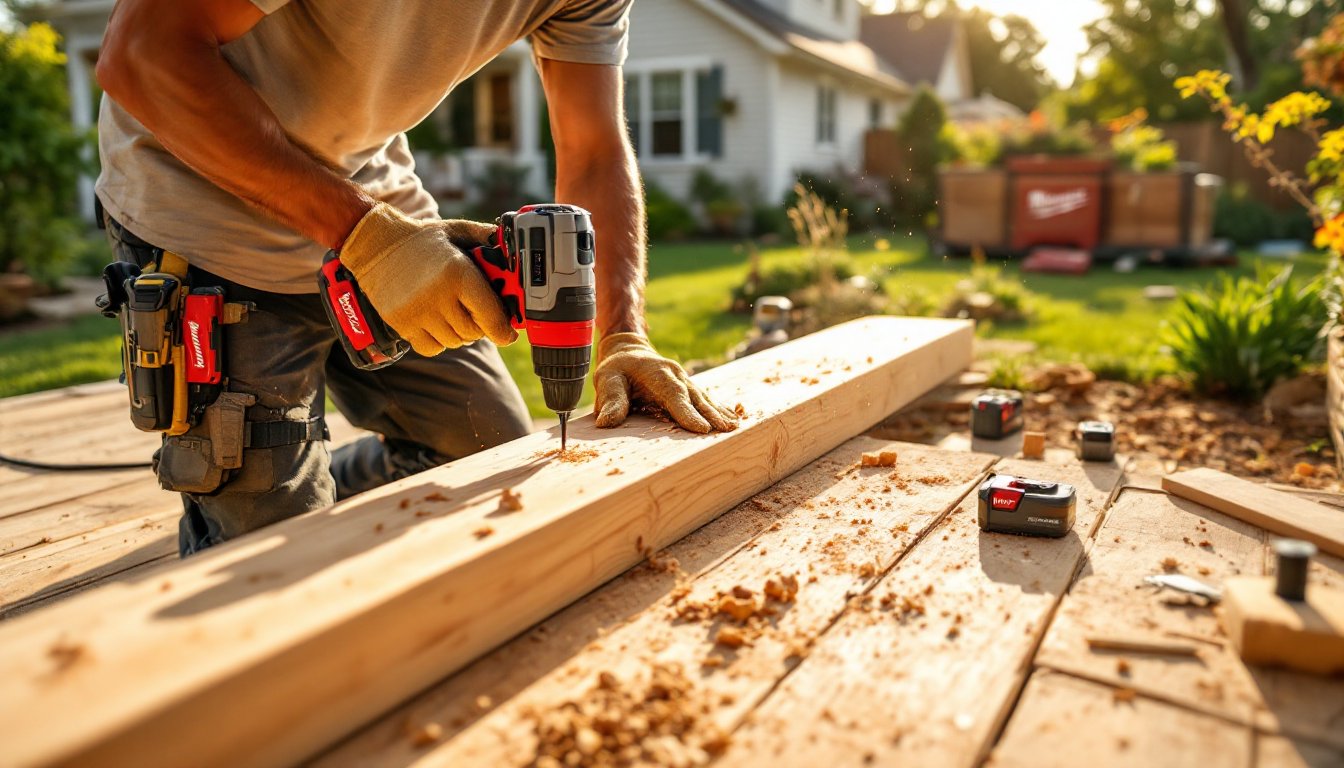
Pair it with a M18 Impact Driver for heavy screwing and bolt work. Impact drivers use rotational strikes to drive fasteners, so they’re less likely to cam out (slip and strip fastener heads) than traditional drills. Essential for deck screwing, where you’re driving hundreds of 3-inch fasteners into pressure-treated lumber. The compact size makes one-handed operation easier on high or overhead work.
Both tools typically come with two M18 Compact Batteries (2.0 Ah) and a single-port charger. A 2.0 Ah battery runs about 30–45 minutes of mixed use depending on task. For bigger projects, consider a 4.0 or 5.0 Ah battery, higher capacity means fewer charging breaks.
Saws and Cutting Tools
The M18 Circular Saw is your main cutting tool for outdoor framing. Seven-and-a-quarter-inch blade, bevel capability up to 50 degrees, and enough power to cross-cut 2x lumber in a single pass. A cordless circular saw avoids the extension cord tangling you’d face with corded tools on a job site. Always wear eye protection and work gloves: sawdust and rotating blades demand respect.
For angled cuts, a M18 Miter Saw (10-inch blade) delivers the accuracy and speed a circular saw can’t match. Essential if you’re building trim work, cutting rafters, or framing any structural component requiring precision angles. Miter saws excel at repeat cuts, cut ten 16-inch pieces to length in minutes. Safety reminder: never reach behind the blade, and always wait for the blade to stop before moving material.
If your yard has overgrowth or tree limbs near the house, the M18 Chainsaw (8-inch or 10-inch bar) saves hours versus a hand saw. Lightweight for overhead work, but still demanding, use two hands, wear face protection, ear protection, and long sleeves. Trimming dead limbs is often a job for a pro, but clearing light brush and light pruning falls within reach.
Choosing the Right Battery System for Your Needs
Milwaukee’s M18 system dominates residential outdoor projects. It’s their full-size platform with the widest tool selection (100+), best runtime, and highest power output. M18 batteries range from compact 2.0 Ah up to extended-capacity 12.0 Ah packs. For a homeowner, start with two 4.0 or 5.0 Ah batteries, enough to finish a modest project without running dry mid-task.
The M12 system is smaller, lighter, and perfect for tight spaces like inside cabinets or under sinks, but it’s less ideal for outdoor heavy lifting. Lower amp-hour ratings mean shorter runtimes for cordless miter saws or chainsaws. Use M12 for drill bits, fastener driving in confined areas, or compact flashlights.
Battery chemistry matters. Modern lithium-ion (Li-ion) batteries are the standard. They charge faster, hold a charge longer during storage, and resist memory effect (the old problem where old batteries “forgot” to charge fully). Milwaukee’s batteries include a fuel gauge so you see remaining charge, no surprises mid-project.
Charge wisely. A charger that pulls 8–10 amps recharges a 5.0 Ah battery in roughly 30 minutes. Cordless tools benefit from acclimation, let batteries and tools sit at ambient temperature for 15–20 minutes before use in extreme heat or cold. Outdoor projects in winter or summer mean battery performance dips slightly, but it’s temporary. Store batteries indoors during off-season to extend lifespan. Garden design inspiration often requires tool investment, so budgeting for a solid charging station with dual ports makes sense if you’re tackling multiple projects.
Maintenance Tips to Extend Tool Lifespan
Outdoor tools face grime, moisture, and temperature swings that indoor gear avoids. Post-project cleanup is the easiest maintenance win: wipe down metal parts with a dry cloth, remove sawdust from vents (compressed air works well), and store tools inside rather than in a shed or garage with condensation risk.
Batteries need climate control. Store them at room temperature (60–80°F) away from direct sunlight and moisture. Avoid storing a fully charged battery for months, drop the charge level to 40–60% for extended storage. Check battery contacts for corrosion: a dry cloth cleans tarnish in seconds before it creates resistance.
Chuck maintenance keeps drills accurate. Once a month, tighten the chuck by hand and test with a bit, if it spins without gripping, the chuck may need service. Repack grease on articulating joints and pivot points yearly if you’re using tools heavily. Milwaukee’s user manuals include part numbers for brushes and other wear items: replacing brushes on a tool is straightforward and extends life significantly.
Keep chargers out of weather. Moisture and high heat degrade the electronics. A wall-mounted charger in a garage or shed works, but avoid direct rain exposure. If a charger shows signs of damage, don’t attempt repair, replace it. DIY repair tutorials often cover basic tool service, but major motor or gearbox work is beyond most homeowners and warrants professional service. Milwaukee’s warranty typically covers defects for five years if you register your tools online.
Conclusion
Milwaukee outdoor tools give you the power and reliability to tackle yard projects with confidence. Start with a solid drill, impact driver, and one or two quality saws, pair them with a sturdy battery system, and maintain them regularly. Your investment will pay dividends across countless projects, from deck building to garden prep to seasonal maintenance. With proper care, these tools last well over a decade.