Table of Contents
ToggleIf you’ve spent time in a quality workshop, you’ve probably noticed that not all power tools are created equal. Jet power tools have built a reputation for delivering precision and durability that resonates with serious DIYers and professionals alike. Whether you’re tackling your first bookshelf or refinishing hardwood floors, understanding what Jet brings to the table can help you make smarter tool investments. This guide walks you through the standout features of Jet tools, which models deserve a spot in your workshop, and how to keep them running strong for years to come.
Key Takeaways
- Jet power tools are built with precision-machined components and cast iron bases that deliver less vibration and more stable cuts than budget alternatives, making them an excellent investment for serious DIYers and professionals.
- A 14-inch Jet band saw is the cornerstone tool for most home workshops, handling curved cuts, resawing, and irregular shapes with adjustable blade speeds (up to 3,200 FPM) that adapt to different materials and prevent blade breakage.
- Proper dust collection integration through standard 2.5-inch or 4-inch hose connections is essential for safety and tool longevity, and most Jet power tools come equipped with compatible ports for common shop vacuums.
- Regular maintenance—including cleaning after each use, replacing dull blades every 40-60 hours, and lubricating moving parts according to the manual—is what separates tools that last a decade from those requiring replacement every few years.
- Jet’s pneumatic tools paired with a quality air compressor create a versatile system for fastening, sanding, and grinding, but an in-line moisture trap and regulator (under $50) are critical investments to protect tool internals from water damage.
- Start your Jet workshop with cornerstone tools like a mid-range table saw and band saw, then expand based on specific projects you tackle, remembering that budget for blades, dust collection, and accessories should factor into your total tool investment.
What Makes Jet Power Tools Stand Out in Your Workshop
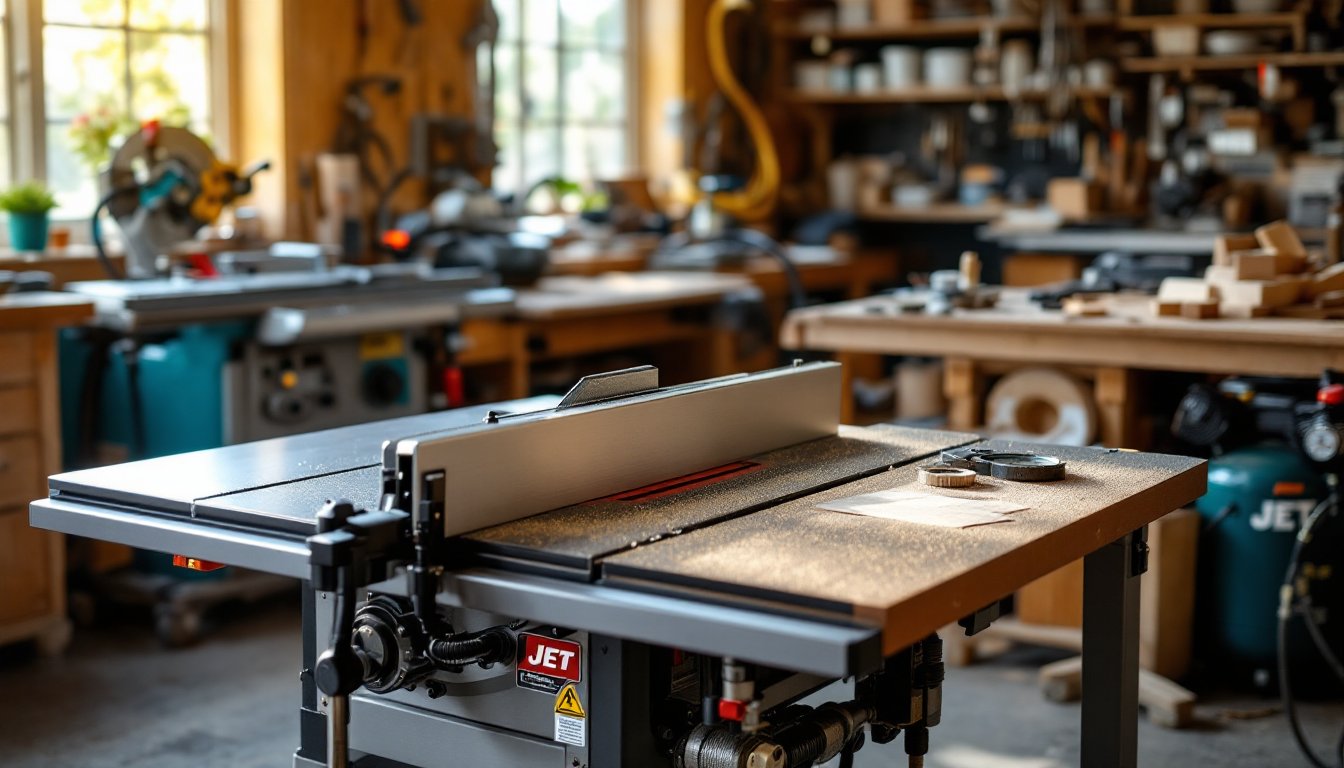
Jet has been manufacturing woodworking and metalworking equipment since 1958, and that expertise shows in their product lineup. The brand focuses on tools built for accuracy and longevity rather than chasing the lowest price point. Their power tools typically feature cast iron bases and precision-machined components, which means less vibration and more stable cuts, something you’ll feel immediately when using a Jet table saw or band saw compared to a budget alternative.
One thing DIYers appreciate about Jet tools is honest engineering. The company doesn’t oversell amp ratings or RPMs that don’t translate to real-world performance. Instead, they spec tools for the jobs they’re actually designed to handle. You’ll also notice that replacement parts and support are accessible: Jet maintains a solid network of dealers and a straightforward parts system, so if you need a replacement blade arbor or dust collection adapter five years from now, you can find it.
Another factor: dust collection integration. Most Jet power tools come with standard dust port sizes (typically 2.5-inch or 4-inch hose connections) that work with common shop vacuums or dust collection systems. This practical design choice matters when you’re trying to keep sawdust manageable, and your lungs healthier. Proper dust collection isn’t optional for safety: it’s essential.
Essential Jet Power Tools Every DIYer Should Own
Building a workshop takes time and budget discipline. Rather than buying every tool on display, focus on pieces that multiply your capabilities across multiple projects.
Jet Circular Saws and Band Saws for Precision Cutting
A Jet band saw is one of the best investments for a home workshop because it handles jobs no other saw can match efficiently. Band saws excel at curved cuts, resawing thick stock, and cutting irregular shapes, tasks that would be tedious or impossible with a circular saw. The 14-inch Jet band saw is the sweet spot for most DIYers: powerful enough to cut through hardwoods, compact enough to fit a modest workspace, and priced reasonably for the capabilities you get.
When selecting a band saw, pay attention to blade speed (measured in feet per minute or FPM) and depth of cut. Jet’s mid-range models typically offer adjustable speed (around 3,200 FPM maximum), which matters because different materials demand different speeds. Pine and softer woods want faster speeds: hardwoods and metal work better at slower speeds. This flexibility prevents blade breakage and extends blade life significantly.
For crosscutting and ripping boards, a Jet circular saw remains indispensable. A portable model gives you versatility on job sites or in tight spaces where a table saw won’t fit. The key spec to watch: blade diameter (usually 7.25 inches for standard models) and motor amperage (a 15-amp motor handles most hardwoods without bogging down). Look for a saw with a precision-ground base plate and adjustable cutting depth, accuracy matters when joining boards.
Jet Air Tools and Pneumatic Systems
If you’ve only used electric power tools, Jet’s pneumatic lineup opens up new possibilities. Air tools are lighter, cooler-running, and ideal for rapid-fire fastening, sanding, and grinding tasks that would fatigue your arm with an electric tool. A Jet air compressor (typically 60-gallon or 80-gallon capacity) paired with an air hose and quick-disconnect couplings creates a versatile foundation.
Common pneumatic tools in a DIY workshop include:
- Brad nailer or finish nailer: Perfect for trim work where you want no tool marks. Jet brad nailers handle 18-gauge nails (for light trim) and are quieter than framing nailers.
- Air sander (orbital or random-orbit): Fast stock removal and excellent dust collection because the dust goes directly into the compressor tank.
- Air impact wrench: Invaluable for fastening and loosening bolts: the speed and torque handle stubborn fasteners without your wrist twisting.
When planning a pneumatic system, remember that air quality matters. Moisture and oil from the compressor can damage pneumatic tools and finishes if you’re spray-painting. Most setups benefit from an in-line moisture trap and a regulator to set consistent pressure downstream. This costs under $50 and adds years to your tool life.
Choosing the Right Jet Tool for Your Projects
Before adding a Jet tool to your cart, ask three practical questions: What specific task am I solving? What’s the duty cycle (occasional weekend project or multiple hours weekly)? And what space do I have to store it?
For intermittent DIY projects, a mid-range Jet tool delivers outstanding value. You’re not paying for industrial-duty components you’ll never stress. A Jet 10-inch table saw with a 1.75-hp motor is more than adequate for crosscutting, ripping, and angled cuts in cabinet work or furniture building. It’ll handle occasional production runs without the price tag of a 2-hp cabinet saw.
For frequent woodworking or serious renovation work, investing in Jet’s premium lines makes sense. Their cabinet saws, industrial band saws, and planer-matcher-jointer combos hold tolerances tighter and accept specialty accessories that expand functionality. Budget for these knowing they’re multi-year commitments, but they’ll outlast the homeowner in many cases.
Don’t overlook Jet’s specialty tools either. A Jet oscillating spindle sander is a game-changer for curved edge work and interior cutouts. A Jet benchtop drill press (typically 8-inch or 10-inch swing) gives you precision hole-making that a handheld drill can’t match, especially in metal or hardwood where concentricity matters. Resources like Bob Vila’s tool reviews and This Old House’s equipment guides provide real-world feedback on which tools solve which problems best.
When budgeting, remember that the actual tool is only part of the cost. Factor in a quality dust collection hose, appropriate blades or bits, safety guards, and if you’re going pneumatic, a decent compressor and air storage tank. That 15-inch band saw is a better buy if you budget for a skip-tooth blade (about $20-30) and a dust collection boot rather than struggling with a generic setup.
Maintenance Tips to Keep Your Jet Tools Running Strong
Maintenance separates the DIYers whose tools last a decade from those buying replacements every few years. Start with the simplest habit: cleaning after each use. Sawdust and chips accumulate in bearings, pulleys, and motor vents, restricting airflow and accelerating wear. A soft brush and compressed air take five minutes and prevent expensive bearing failures.
Second, check blade and bit sharpness regularly. A dull blade works harder, creates more heat, and produces tear-out or rough edges. Sharp blades actually make tools safer because they require less feed pressure. For band saws, replace blades every 40-60 hours of use depending on material hardness: a blade costing $25-40 beats repairing a burned-out motor bearing costing $200+.
Third, lubrication matters on moving parts. Check your Jet manual for specific lube points, typically, table saw arbor bearings, band saw wheel axles, and drill press spindle bushings benefit from light machine oil or waterproof grease applied sparingly. Over-lubricating attracts sawdust and creates gunk: a little goes a long way.
For pneumatic tools, drain the moisture trap on your air compressor weekly (daily if you’re using air tools frequently). Water in the system causes rust inside hoses and damages tool internals. Keep your air hose coiled loosely and store it indoors when not in use, UV breaks down hose material faster than anything else.
Finally, inspect guards and safety systems before each session. A blade guard that’s stuck open or a fence that’s not square won’t stop you from using the tool, but it increases accident risk. Take 30 seconds to ensure everything moves freely and sits where it should. Jet tools are well-designed, but they demand respect and attention.
Conclusion
Jet power tools represent solid engineering and real value for DIYers ready to move beyond budget-tier equipment. Whether you’re starting out with a band saw and basic workshop tools or expanding into pneumatic systems, Jet’s reputation for accuracy and durability holds up in practice. The brand won’t oversell you, replacement parts are findable, and the tools reward proper maintenance with years of reliable service. Start with one or two cornerstone tools, a table saw and band saw are the classic combo, and build from there based on the projects you actually tackle.