Table of Contents
ToggleMilwaukee 18V tools have earned their reputation as the go-to choice for DIYers tackling everything from building decks to hanging drywall. The compact power, long battery life, and durable design make them reliable partners for homeowners who want professional results without the commercial-grade price tag. Whether you’re upgrading from corded tools or starting your cordless arsenal, understanding what Milwaukee 18V offers, and how to match the right tool to your projects, saves money, frustration, and time. This guide walks you through why these tools matter, which ones deliver real value, and how to build a system that grows with your ambitions.
Key Takeaways
- Milwaukee 18V tools strike the optimal balance between power and portability, making them the ideal choice for DIYers who need professional results without the bulk of larger commercial systems.
- The M18 ecosystem eliminates platform jumping—a single battery powers drills, impact drivers, circular saws, and reciprocating saws, reducing clutter and simplifying your toolkit expansion.
- Start with a combo kit bundling a drill and impact driver with batteries and charger for $150–$200, which covers 80 percent of household fastening and drilling needs.
- Invest in at least two batteries so one charges while the other powers your work, preventing mid-project dead batteries and maximizing productivity on weekend projects.
- Milwaukee 18V tools feature durable metal chucks, reinforced gearboxes, and blade brakes that prioritize safety and longevity, earning trust from both trade professionals and homeowners.
Why Milwaukee 18V Tools Stand Out for Home Projects
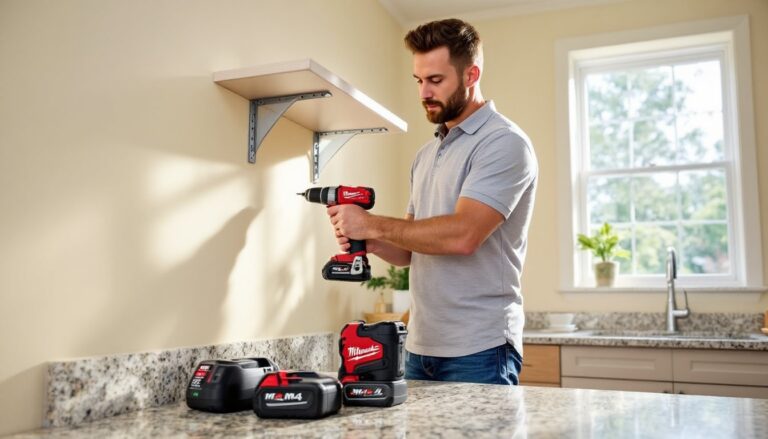
Milwaukee’s 18V platform dominates the DIY space for good reason. The voltage sits at an optimal sweet spot, powerful enough to handle serious fastening and drilling without the bulk and weight of larger 20V or 24V systems. This matters when you’re balancing a drill overhead while installing cabinet hardware or working in tight crawl spaces.
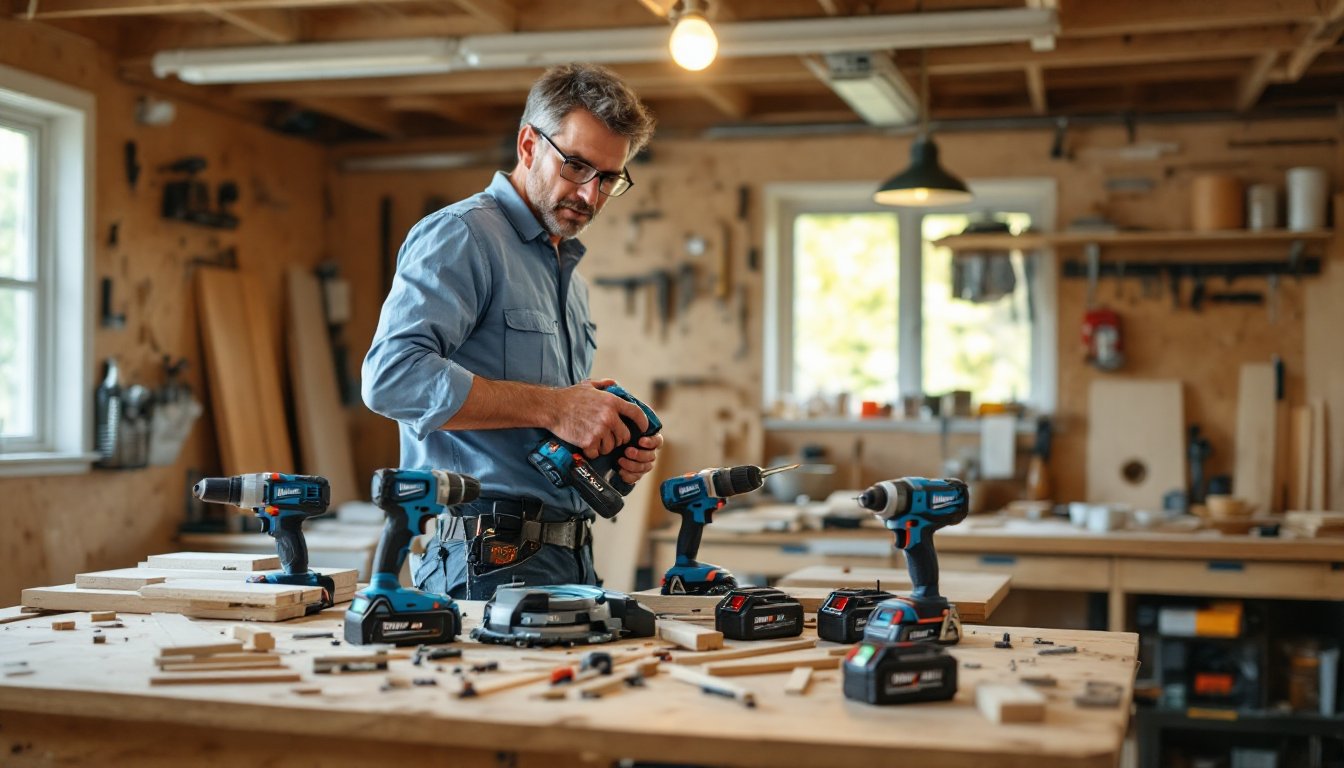
The key advantage is the M18 ecosystem. Once you own a few tools on this battery system, adding new ones is straightforward. A single 5.0Ah battery powers your drill, impact driver, circular saw, and reciprocating saw without platform jumping. That consistency means less clutter in your garage and faster learning curves across tools.
Durability sets Milwaukee apart from budget brands. The tools are built with metal chucks, reinforced gearboxes, and rubberized bodies that survive drops onto concrete. Trade professionals trust these tools on job sites because they don’t quit halfway through a project. For home projects, that reliability means your investment won’t strand you mid-renovation.
Essential Milwaukee 18V Tools Every DIYer Should Own
Drills, Impact Drivers, and Fastening Tools
The 18V Compact Drill/Driver (M18 CDC) is the foundation of any toolkit. It delivers 300 unit watts out (UWO) of power, enough for drilling through softwood, hardwood, and light steel without binding. The single-sleeve ratcheting chuck grips bits firmly, and the two-speed transmission (0-450 and 0-1,500 RPM) lets you control torque for delicate work like driving trim screws or aggressive work like boring half-inch holes.
Pair it with an 18V Impact Driver (M18 CIDS). Impact drivers deliver rotational force in tiny bursts, allowing you to drive long fasteners and break loose corroded bolts without the wrist torque a drill demands. The impact driver’s compact head fits where a drill can’t, making it indispensable for joist hangers, lag bolts, and stripped hardware. Don’t skip this, shoulder injuries from trying to force a drill through stubborn fasteners are real.
Both tools weigh around 3.5 pounds, light enough for overhead work but substantial enough to feel intentional. The side handles grip securely, and the LED work light illuminates dark corners of your project.
Saws and Cutting Instruments
The 18V Compact Circular Saw (M18 CCS) cuts dimensional lumber and plywood without kicking or binding. At 6.5 pounds, it’s maneuverable enough for one-handed crosscuts, yet the power stays consistent through rips. The blade brake stops rotation in less than three seconds, critical safety when you’re working alone. Always wear safety goggles and a dust mask: circular saws launch splinters faster than you can react.
A Reciprocating Saw (M18 SAWZALL) transforms demo work. Feed rates on Milwaukee’s model reach 3,000 strokes per minute, cutting through nails embedded in framing or old pvc pipe. This tool screams in your hands, so ear protection is mandatory. The tool-free blade change saves time when switching between wood and metal-cutting blades.
Both cutting tools accept standard blades you’ll find at any home center. Generic blades cost two dollars: branded Milwaukee blades run five to eight dollars but last longer and cut cleaner. For trim work, cleaner cuts matter.
Battery and Charging System Considerations
The M18 battery platform uses Redlithium-Ion cells, which hold charge longer and perform better in cold weather than older lithium designs. Capacity ranges from 1.5Ah starter packs to 5.0Ah and 8.0Ah heavy-hitters. A 5.0Ah battery delivers enough runtime for most weekend projects, typically one to two hours of continuous drilling or driving, while remaining light enough to carry in your tool belt.
Charging happens on a 30-minute charger (M18 Charger) or the faster M12/M18 Multi-Voltage Charger that tops 5.0Ah batteries in 20 minutes. If you own multiple batteries, staggering charges across two chargers beats waiting for sequential charging. The charger shows red, amber, and green lights to indicate battery status: green means fully charged and safe to store.
Battery runtime depends on task. Drilling softwood consumes less energy than driving 3-inch lag bolts into oak. Heavy cutting, like feeding a circular saw continuously, drains batteries faster than intermittent drilling. Buy two batteries minimum. While one charges, the other powers your work, preventing mid-project dead batteries.
Cold weather cuts battery performance by roughly 25 percent. If you’re working in a garage below 50°F, expect shorter runtimes. Store batteries indoors overnight to maintain charge capacity. Unlock the Power of provides deeper guidance on battery management across platforms.
Getting Started: Choosing Your First Milwaukee 18V Kit
Start with a combo kit bundling a drill and impact driver with batteries and a charger. Milwaukee’s M18 2-Tool Combo Kit (typically around $150–$200 depending on sales) includes an 18V Compact Drill/Driver, 18V Impact Driver, two 1.3Ah batteries, and a 30-minute charger. It’s the low-cost entry point that covers 80 percent of household fastening and drilling needs.
If you plan serious cutting work, deck building, fence installation, or finishing a basement, step up to a bundle adding the circular saw. These three-tool or four-tool kits cost more upfront but save on individual tool purchases and include higher-capacity batteries (usually 5.0Ah). Look at bundled options rather than buying tools separately: bundle pricing beats à la carte.
Consider your house’s typical projects. Hanging cabinets, assembling furniture, and driving trim screws? The basic 2-tool kit handles it. Framing an addition, cutting roof sheathing, or tearing out old flooring? The expanded kit justifies the investment. Resources like Family Handyman and Popular Mechanics offer detailed tool reviews comparing Milwaukee 18V offerings against competitors, helping narrow choices based on your priorities.
Before buying, read reviews on actual projects matching yours. A tool that excels at driving trim screws might struggle with rough demolition. Milwaukee’s website shows runtime specs and power ratings for each model, check these numbers against your intended use. Avoid over-buying features you won’t use: a compact drill costs less and handles most home projects better than a heavy-duty contractor model gathering dust in your garage.
Conclusion
Milwaukee 18V tools deliver reliable performance, compact design, and long-term value for serious DIYers. Start with a combo kit matching your actual projects, invest in quality batteries, and let the ecosystem expand as your ambitions grow. Honest assessment of your needs beats buying the whole lineup at once. A well-chosen Milwaukee 18V setup transforms home projects from frustrating ordeals into manageable, even enjoyable work.