Table of Contents
ToggleHVAC work doesn’t always require a licensed technician, or at least, not for every task. Homeowners who understand their heating and cooling systems can handle basic maintenance, emergency repairs, and routine inspections with the right hand tools. Unlike carpentry or plumbing, HVAC doesn’t demand an enormous toolkit, but the tools you do need must be precise and durable. This guide walks you through the essential HVAC hand tools that every DIYer should have on hand, from nut drivers and fin combs to manifold gauges and leak detectors. We’ll cover what each tool does, when you actually need it, and how to avoid the common mistake of buying tools you’ll never use.
Key Takeaways
- Essential HVAC hand tools like nut drivers, fin combs, and diagnostic meters cost $200–$400 to start and handle 80% of homeowner maintenance tasks without licensing.
- Precision and material compatibility are critical when working with HVAC systems—brass or stainless steel fittings corrode with wrong tools, and aluminum fins bend under careless handling.
- Diagnostic tools like infrared thermometers, multimeters, and duct testers pinpoint problems before you buy parts, saving money by preventing unnecessary repairs.
- Refrigerant handling and line work require EPA certification; homeowners can read manifold gauges and detect leaks but shouldn’t charge systems or perform sealed component repairs.
- Proper storage in a dry toolbox with silica packets and annual calibration of diagnostic tools prevent rust and keep measurements accurate for critical repairs.
- Respecting safety protocols—killing power at breakers, wearing insulated gloves, working in ventilated areas, and knowing when to call licensed professionals—protects both your home and your safety.
Understanding HVAC Hand Tools and Their Purpose
HVAC systems involve three main areas: ductwork, electrical components, and refrigerant lines. Hand tools help you access, adjust, and diagnose problems in these areas without power tools or specialized equipment. Most HVAC repairs homeowners can tackle are cosmetic (cleaning coils), preventive (replacing filters, clearing condensate drains), or diagnostic (checking airflow, reading temperatures). Structural or refrigerant work typically requires EPA certification and licensing, so we’ll be clear about that boundary.
The key difference between HVAC tools and general repair tools is precision and material compatibility. Brass or stainless steel fittings corrode with the wrong tools, and aluminum fins bend under careless handling. You’re not building a deck, you’re working with delicate components that cost hundreds to replace. Understanding your tool’s purpose before picking one up saves you money and frustration.
Must-Have HVAC Tools for Basic Maintenance and Repairs
Start here if you’re new to HVAC work. These tools handle 80% of homeowner-level tasks and cost under $100 to own.
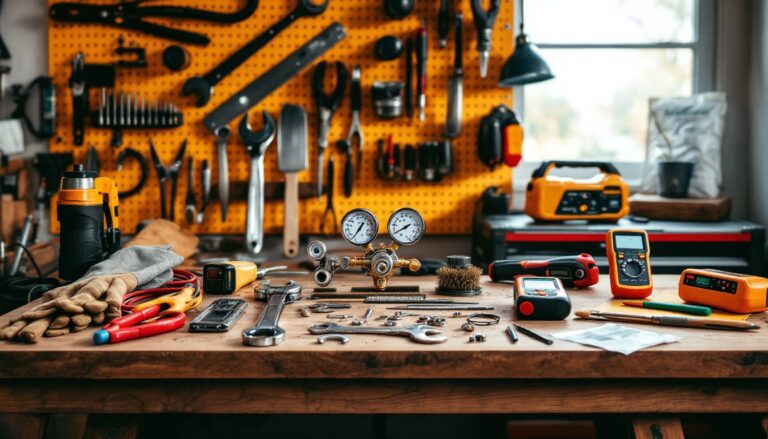
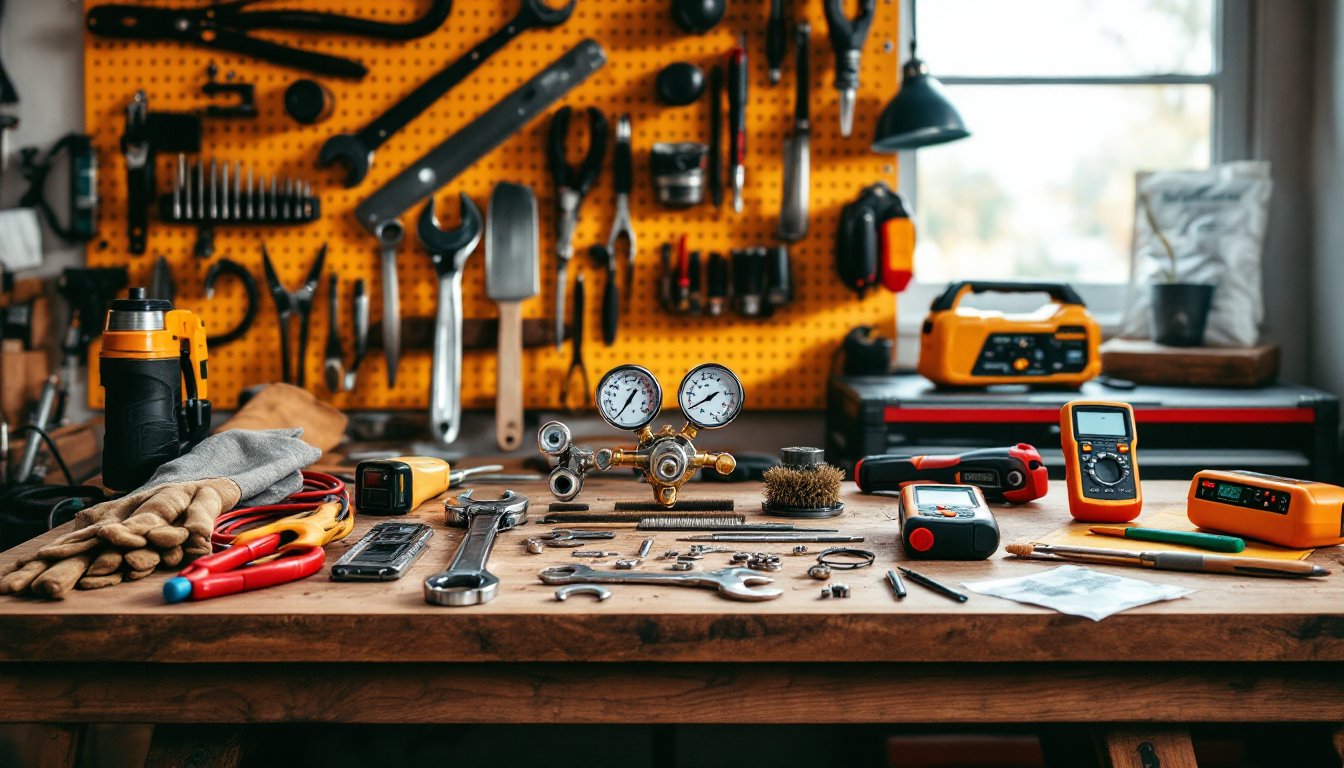
Nut drivers and hex keys are your daily workhorses. Most HVAC fasteners are 1/4″, 5/16″, or 3/8″ nuts, and a non-magnetic nut driver set (brass or insulated handles) prevents them from sticking to compressor housings. Skip cheap sets: they round off faster than quality chrome-plated ones.
A coil fin comb straightens bent aluminum fins on outdoor condenser coils without puncturing them. Bent fins reduce airflow and system efficiency. The tool looks like a small rake: run it gently perpendicular to the fins. One pass per season during cleaning prevents major losses.
An adjustable wrench (10″ or 12″) handles varied bolt sizes when nut drivers don’t fit. Choose one with a smooth, precision-machined worm gear: cheap wrenches slip and round bolt heads.
A manifold gauge set (or “charging gauge set”) measures system pressure and connects to service ports. You don’t charge refrigerant yourself without EPA certification, but homeowners can read gauges to diagnose pressure imbalances. A mid-range analog set ($40–$70) is reliable and forgiving.
A digital thermometer or clamp meter confirms temperature swings across the system. If your air handler outputs 55°F but indoor temps are 72°F, something’s throttling airflow, often a dirty filter or blocked return duct.
Brush and fin comb kit includes soft brass bristles for coil cleaning. Steel brushes scratch fins: avoid them. A small garden hose and shop vacuum handle most debris without damaging delicate tubing.
Refrigerant and Electrical Tools for Advanced Tasks
Stop here if you don’t hold EPA certification. Refrigerant handling requires legal licensing, and electrical HVAC work often needs licensed electrician oversight. That said, understanding these tools helps you follow technician work or prepare for certification exams.
A refrigerant leak detector (electronic, not dye-based) identifies escaped refrigerant before pressure drops tank your system. They cost $50–$200 and beep near leaks. Used with safety goggles and gloves, they’re handheld and quick. Note: dye-based detectors mix with refrigerant and complicate future service.
Vacuum pump and micron gauge remove moisture and air before refrigerant enters the system. A micron gauge measures vacuum depth in microns: 500 microns or lower is EPA-required. A consumer-grade pump ($100–$300) handles small repairs, but commercial ones cost $1,000+.
Flaring tool and swaging tools form seals on copper tubing during line work. Flaring creates a 45° seat for fittings: swaging stretches tubing without deforming it. Both require precise technique, one slip ruins a $50 line. These tools ($30–$150 per tool) are for serious DIYers only.
Voltage testers and multimeters check electrical continuity and compressor circuits. A non-contact voltage tester (under $20) signals live current without contact. A digital multimeter ($15–$50) reads resistance, voltage, and amperage for capacitor testing and thermostat diagnostics. Always assume lines are live: test before touching.
Diagnostic and Testing Equipment
Diagnosis saves money because it pinpoints problems before you buy parts. These tools aren’t flashy, but they prevent guessing.
An infrared thermometer (non-contact) reads surface temps from a distance, critical for checking air handler output, condenser coil temperature, and ductwork. Point it at the evaporator coil outlet: normal AC output is 50–60°F. If it reads 65°F or higher, refrigerant charge or airflow is compromised. Cost: $15–$40 for accuracy within 2°F.
Duct tester or blaster door pressurizes ducts to find leaks. Seal your return vent with the blaster, turn on the system, then walk along ducts with a soap spray bottle. Bubbles reveal leaks. An entry-level blaster costs $30–$60 and handles most homes.
Psychrometer or sling psychrometer measures humidity and wet-bulb temperature. If your AC runs constantly but humidity stays above 55%, either the coil is icing over (refrigerant issue) or the system is undersized. A basic sling psychrometer costs $20–$40.
Airflow meter clips onto ductwork to measure cubic feet per minute (CFM). Systems typically deliver 400 CFM per ton of cooling. Low readings point to filter clogs, duct restrictions, or blower problems. Digital models run $100–$250, but a simple hood anemometer ($25–$50) estimates flow at registers.
Diagnostic work isn’t glamorous, but it’s where amateurs become competent, and where you avoid paying technicians $200 to tell you the filter’s dirty.
Choosing and Maintaining Your HVAC Tool Collection
Don’t buy a mega-set just because it looks complete. You’ll own tools you never touch, and they’ll rust in a garage corner.
Start with basic maintenance tools (nut drivers, wrench, fin comb, thermometer). Use them for one season. Then add diagnostic tools (multimeter, infrared thermometer) as you grow confident. Specialized tools like flaring kits come later, only if you’re regularly servicing refrigerant lines.
Budget-smart shopping means buying mid-range over cheap. A $12 nut driver set fails in six months: a $35 set lasts years. Mechanical Workshop Tools: Unlocking your projects depends on reliable equipment, not bulk discounts.
Storage matters. Moisture corrodes brass and steel. Keep tools in a dry toolbox or wall-mounted pegboard away from HVAC condensation (especially in humid climates). Silica packets in the toolbox reduce rust. Wipe tools dry after use on damp systems.
Calibration and testing. Multimeters and thermometers drift over time. Have them checked annually if you use them monthly, or before diagnosing a critical repair. A $10 calibration prevents a $500 parts mistake. Gauges lose accuracy: if readings seem off, send them to a service center ($30–$60) rather than guessing.
Consult Bob Vila’s home improvement guides for tool reviews and renewal recommendations. Quality tools pay for themselves in avoided service calls.
Safety Considerations When Working With HVAC Systems
HVAC systems contain pressurized refrigerant, electrical current, and moving parts. Respect that.
Always kill power at the breaker before touching electrical connections or components. Even with power off, capacitors hold charge: test with a multimeter before contact. Wear insulated work gloves (not latex) around electrical wiring. A shock from a 240V system can cause cardiac arrest.
Refrigerant is odorless and heavier than air, it pools in low spaces and displaces oxygen. Work outside or in well-ventilated areas. If you smell refrigerant, evacuate and call a licensed tech. Never vent refrigerant into the air: it’s illegal and harmful.
Wear safety glasses when cleaning coils with brushes or compressed air: fin debris flies fast. Brass fins are sharp: work with leather-palmed gloves to avoid cuts. Use hearing protection if running diagnostics near a running compressor (they’re loud).
Don’t overburden yourself. A condenser unit weighs 50–100 pounds: have a helper steady it if you’re removing it for coil cleaning. Strains and falls cause more DIY injuries than tools.
Know your limits. If refrigerant escaped, the compressor motor is burned, or the system won’t cycle, that’s professional territory. Licensed techs carry EPA-certified recovery equipment and liability insurance. Trying to save $200 on a service call can cost $3,000 in compressor replacement. Today’s Homeowner maintenance checklists outline when to call help.
Build confidence with small wins, filter changes, coil cleaning, pressure readings, before tackling complex diagnostics.
Conclusion
HVAC hand tools aren’t complicated, but they’re specific. Investing in quality basics, nut drivers, wrenches, diagnostic meters, lets you maintain your system and spot problems early. The tools cost $200–$400 to start, far less than a single service call. Match your tools to your skills: basic maintenance first, then diagnosis, then specialized repairs only if you’re certified and confident. Remember, a smart DIYer knows when to stop and call a professional. That’s not failure, that’s how you keep your system running and your home comfortable.