Table of Contents
ToggleBuilding a reliable power tool collection doesn’t mean buying everything at once or spending a fortune on gear you’ll rarely touch. A solid Milwaukee power tools set gives you a focused foundation that handles most home improvement projects, from framing and decking to cabinet work and finish carpentry. Whether you’re hanging drywall, installing flooring, or tackling a complete kitchen remodel, starting with quality cordless equipment saves time, reduces fatigue, and produces cleaner results than hand tools alone. This guide walks you through selecting the right Milwaukee tools, understanding which ones truly earn a spot in your arsenal, and keeping them running strong for years.
Key Takeaways
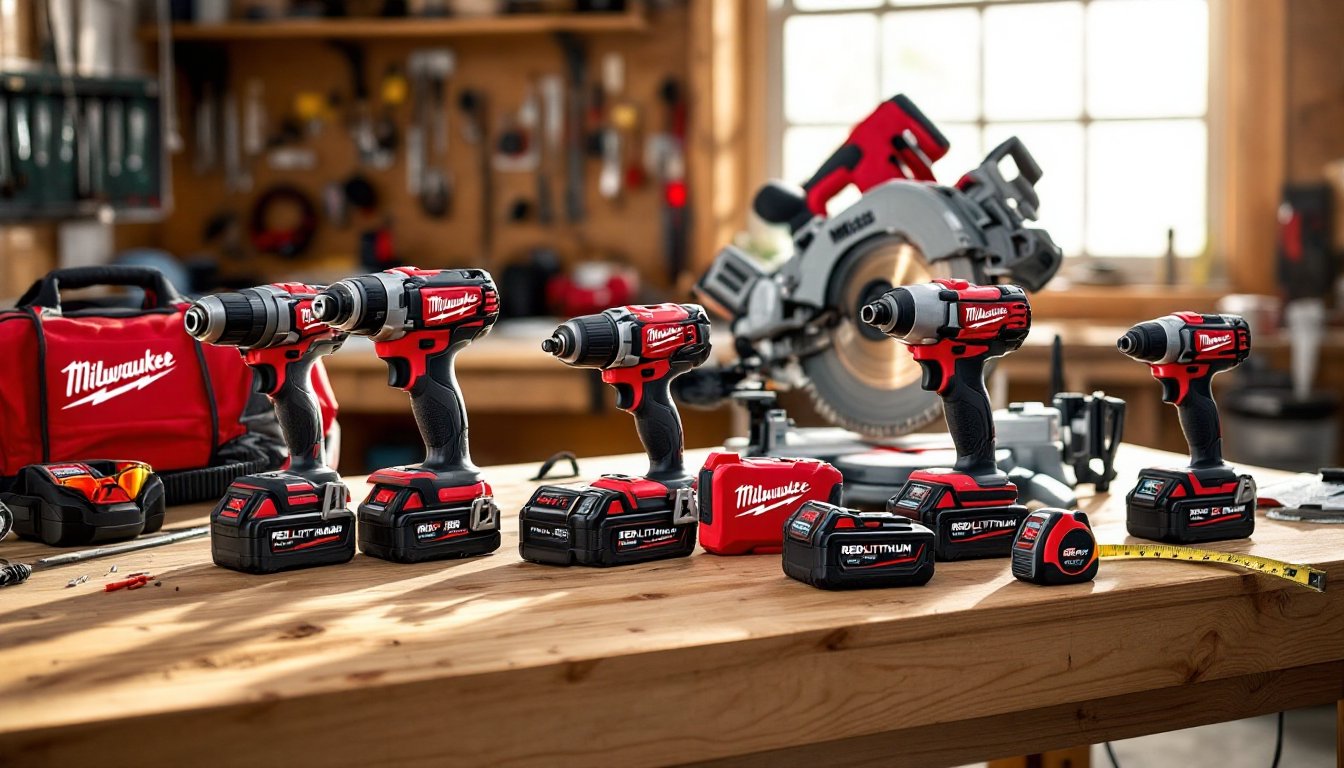
- A Milwaukee power tools set built around a drill-driver, impact driver, circular saw, and miter saw handles 80% of home improvement projects without unnecessary expense.
- Brushless motors in Milwaukee M18 and M12 tools deliver more power per charge and outlast budget alternatives by years, justifying the premium upfront cost.
- Impact drivers provide percussive force that outperforms drill-drivers for fastening heavy materials like lag screws and deck bolts in seconds, making them essential for efficient work.
- Proper battery storage in cool, dry conditions and regular rotation of REDLITHIUM cells can extend tool life to 3–5 years and achieve 500+ full charge cycles.
- Prioritize tools that match your actual upcoming projects rather than buying every tool in the catalog; specialized equipment like rotary hammers and angle grinders are only necessary for specific tasks.
What Makes Milwaukee Power Tools Stand Out
Milwaukee has built a reputation on durability and performance, not hype. Their tools are engineered for job sites and serious DIYers, which means they’re overbuilt for casual weekend projects but built to last. The difference shows in the motor design, battery technology, and ergonomics.
Brushless motor technology is the big one. Brushless motors have fewer moving parts, run cooler, and deliver more power per charge than older brushed designs. A Milwaukee M18 or M12 brushless drill-driver will outlast a budget-brand equivalent by years, even if you use it hard. The batteries are also solid, Milwaukee’s REDLITHIUM cells hold a charge longer than competitors’ offerings and recover better after deep discharge.
Build quality matters too. The gearbox on a Milwaukee impact driver is tighter, the chuck grips bits more securely, and the rubber over-mold on the handle won’t crack after sitting in the sun. You’ll pay more upfront, but you won’t be replacing tools every few seasons. For homeowners tackling multiple projects a year, that reliability is worth the premium. Cordless tools have revolutionized the way people tackle projects, and Milwaukee’s system approach means every tool on the platform shares the same battery ecosystem, no redundant chargers or proprietary connections cluttering your garage.
Essential Tools Every DIY Kit Should Include
Drill-Drivers and Impact Tools
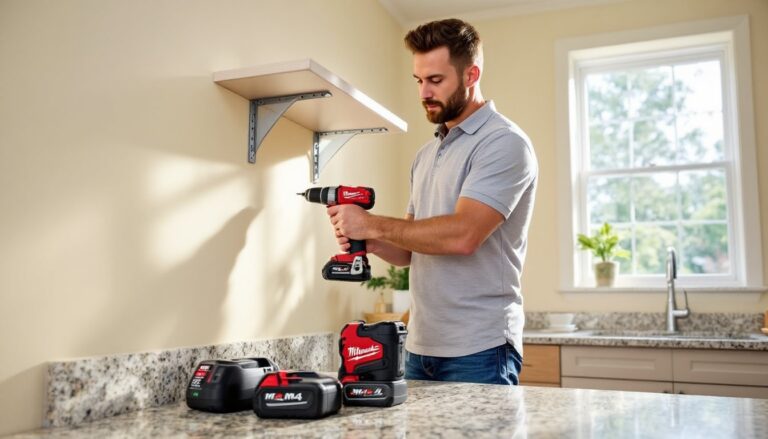
Start with a compact drill-driver in the M12 or M18 line. The M18 compact drill-driver is the workhorse: it drives fasteners, drills holes, and mixes small batches of paint with an optional paddle attachment. Pair it with an M18 impact driver for fastening deck screws, framing nails, and anything that requires high rotational force without twisting your wrist. Impact drivers are faster and less tiring on joints, especially over an eight-hour day.
Many new DIYers skip the impact driver, thinking a drill-driver does both jobs. It doesn’t. A drill has rotational force: an impact driver has percussive (hammering) force, which is fundamentally different. For ½-inch bolts or lag screws, an impact driver will drive them in seconds: a drill-driver struggles and heats up. If your budget allows, grab both. If not, the impact driver edges out the drill for pure speed.
Saws and Cutting Equipment
The M18 circular saw is the go-to for ripping lumber and breaking down sheet goods. A 7¼-inch blade cuts through 2x material cleanly and handles plywood without binding. Pair it with a miter saw (10-inch M18 or corded, your call) for crosscuts and angled cuts. Miter saws are faster and more accurate for trim work: circular saws are more versatile on job sites.
For fine detail work, a reciprocating saw (also called a “Sawzall”) cuts through nails, plaster, and demolition work that would destroy a circular saw blade. Keep a drill with spade bits or Forstner bits for boring holes larger than a ¼-inch, and grab a jigsaw if you’re cutting curves or notching around obstacles. The M18 jigsaw on Milwaukee’s lineup handles thick stock without wandering and is lighter than older corded models. Recent tested Milwaukee power tools show consistent performance across these categories, proving the investment pays off.
How to Choose the Right Set for Your Projects
Start by listing the projects you’ll tackle in the next year. Are you framing a shed? Finishing a basement? Building a deck? Painting the entire house? Each project type demands different tools.
For framing and structural work, you’ll want a drill-driver, impact driver, circular saw, and level. Add a stud finder and a 16-foot tape measure (the ergonomic Milwaukee models are solid). A power miter saw makes cutting studs and headers faster and more accurate than hand-sawing.
For finish carpentry and trim, upgrade to a miter saw and jigsaw. Pocket-hole jigs are optional but make assembly cleaner. Free DIY furniture plans and woodworking tutorials on platforms like Ana White show how finish quality matters, poorly cut joints and misaligned fasteners show up immediately.
For demolition or renovation, a reciprocating saw becomes essential. Add a 12-amp angle grinder if you’re cutting rebar or metal studs. Always wear ANSI-approved safety glasses and cut-resistant gloves when operating grinders, sparks and flying debris will find exposed skin.
Don’t buy tools you won’t use. A rotary hammer is overkill for hanging pictures: a heavy-duty impact wrench is unnecessary for automotive work unless you’re a shade-tree mechanic. Choose the set that mirrors your actual projects, not the tools that look impressive in the catalog. Most DIYers get 80% of their work done with a drill-driver, impact driver, circular saw, and miter saw, everything else is a nice-to-have.
Maximizing Battery Life and Tool Longevity
Batteries are the weak point in any cordless system, so treat them right. Milwaukee’s M18 and M12 REDLITHIUM batteries come in 1.5Ah, 2.0Ah, 3.0Ah, and 5.0Ah sizes. Larger amp-hours mean longer runtime but also heavier weight and slower charge times. For hand tools, a 2.0Ah battery is the sweet spot, enough runtime for most tasks without exhausting your arms.
Store batteries in a cool, dry place. Heat kills lithium cells. Never leave batteries in direct sunlight or in a hot garage over summer: a climate-controlled shelf in a basement or shop is ideal. Charge batteries fully before long-term storage (more than a month) and check them monthly. A dead battery left sitting for months can become permanently damaged.
Rotate batteries if you have multiple sets. Running one set into the ground while another sits idle causes imbalance. Charge and use them evenly, and you’ll get 500+ full cycles, roughly three to five years of regular DIY use. The best Milwaukee tools of 2024 consistently highlight the durability of this battery ecosystem compared to competitors.
Keep your brushes clean. After dusty work, use an air blower to clear dust from motor vents and the chuck. A brush or compressed air removes sawdust from seams and the battery connection points. Corrosion on the battery terminals reduces charging efficiency: a pencil eraser or fine steel wool cleans them in seconds. These tiny habits add years to your tool life.
Conclusion
A solid Milwaukee power tools set is an investment in speed, accuracy, and reliability. Start with a drill-driver, impact driver, circular saw, and miter saw, that foundation handles 80% of home improvement work. Add specialized tools as your projects demand them. Respect battery storage and maintenance, and your Milwaukee tools will outlast most of the projects they build. Plan your purchases, choose quality over quantity, and you’ll have a shop that actually works for you.